

Welcome to WELTIN

info@weltin.com

+91 9958280807

Home / Residential Status for NRIs

Residential Status for NRIs

Residential Status for NRIs – Know Your Status with WELTIN

What is NRI Residential Status?

NRI Residential Status determines whether a Non-Resident Indian (NRI) is considered a resident or non-resident for taxation and legal purposes in India. It is based on the number of days spent in India within a financial year. This status affects taxation, banking, investments, and compliance with FEMA and RBI regulations.

Why NRI Residential Status is important?

NRI Residential Status in India is crucial as it determines tax obligations on both global and Indian income. It also impacts compliance with FEMA and RBI regulations, which govern banking, investments, and other legal matters. This status influences eligibility for tax exemptions and benefits under Indian law.

Key Factors That Determine Your
Residential Status

Duration of Stay

182+ days of stay in India within a financial year.

Global Income Source

Determines if global income is taxable in India.

work

Purpose of Visit

Work, business, or personal reasons impact the classification.

FEMA Regulations

Impacts foreign exchange and repatriation rules.

Previous Year’s Stay

Duration of stay in the past 4 years is considered.

Employment or Business

Source and location of income influence the status.

Categories of Residential Status for NRIs

Resident Indian (RI)

Stayed in India for 182+ days in a year.

Non-Resident

Non-Resident Indian (NRI)

Stayed in India for less than 182 days annually.

Resident but Not Ordinarily Resident (RNOR)

Resident but Not Ordinarily Resident (RNOR)

Stayed less than 729 days in past 7 years.
Our Comprehensive NRI Taxation Services

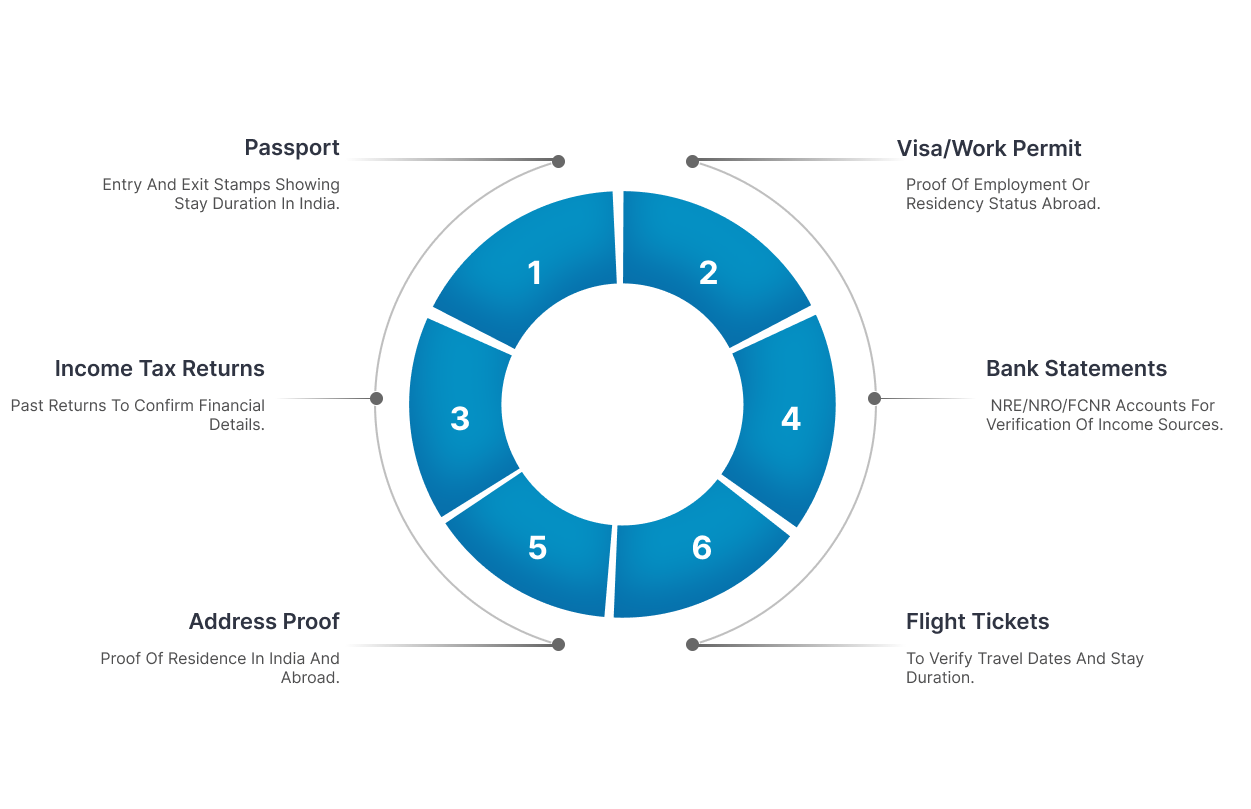
Documents Required for Residential Status Verification

How WELTIN Helps You?

Expert Consultation

Analyze your residential status and provide tailored advice

Banking Advice

Recommend the right NRE, NRO, or FCNR account.

DTAA Advisory

Status Assessment

Accurately determine your residential status for legal compliance.

international

Investment Support

Guide investment decisions based on your residential status.

Gains-Tax

Tax Guidance

Help you understand tax liabilities and obligations in India.

dedication

FEMA & RBI Compliance

Ensure adherence to financial regulations and repatriation laws.

Expert-Guidance
Efficient-Tax
Seamless-Investment

Get Assistance from WELTIN Today!

Contact WELTIN for expert guidance on determining your NRI residential status, managing taxes, investments, and ensuring compliance with FEMA and RBI regulations. Get professional help for smooth financial operations.

Reach out to WELTIN to learn more about how our Audit and Assurance services can empower your business. Let’s ensure financial integrity and set the stage for sustainable growth.
  • Email - Info@weltin.com
    Email - Info@weltin.com
  • Call - +91 9958280807
    Call - +91 9958280807
  • Location - 1st Floor,276, Gagan Vihar Delhi 110051, India
    Location - 1st Floor,276, Gagan Vihar Delhi 110051, India
  • Working  Hours - Monday to Saturday, 9:00AM To 06:00PM
    Working Hours - Monday to Saturday, 9:00AM To 06:00PM

Get in touch

Frequently Asked Question

Residential status is based on the number of days an individual stay in India during the financial year and the preceding four years. The key thresholds are 182 days or 60 days (with conditions), as per Section 6 of the Income Tax Act, 1961.
Yes, you can be a tax resident in two countries under respective domestic laws. In such cases, tie-breaker rules under the DTAA help determine your primary country of residence.
Possibly, yes. If your stay in India exceeds the prescribed threshold, you may still qualify as a resident despite working abroad for part of the year.
A Resident and Ordinarily Resident (ROR) is taxed on global income, while a Resident but Not Ordinarily Resident (RNOR) is taxed only on Indian-sourced income and business/profession income controlled from India.
It determines the extent of your income taxable in India. Residents pay tax on global income, while Non-Residents and RNORs are taxed only on income sourced from India.
FAQs
WhatsApp
1